Version vs revision: the difference that keeps concrete out of the wrong place
A Version is a whole new upload. A Revision is the label it carries. Mixing the two up sounds harmless until someone builds from the wrong drawing.
The fluxems team · Document control
Walk any site office and you will hear the words version and revision used as if they mean the same thing. Most days nobody notices. Then a slab gets poured off a drawing that was superseded three weeks ago, and suddenly the difference matters very much. The rework bill in Rand tends to focus the mind.
The distinction, in one breath
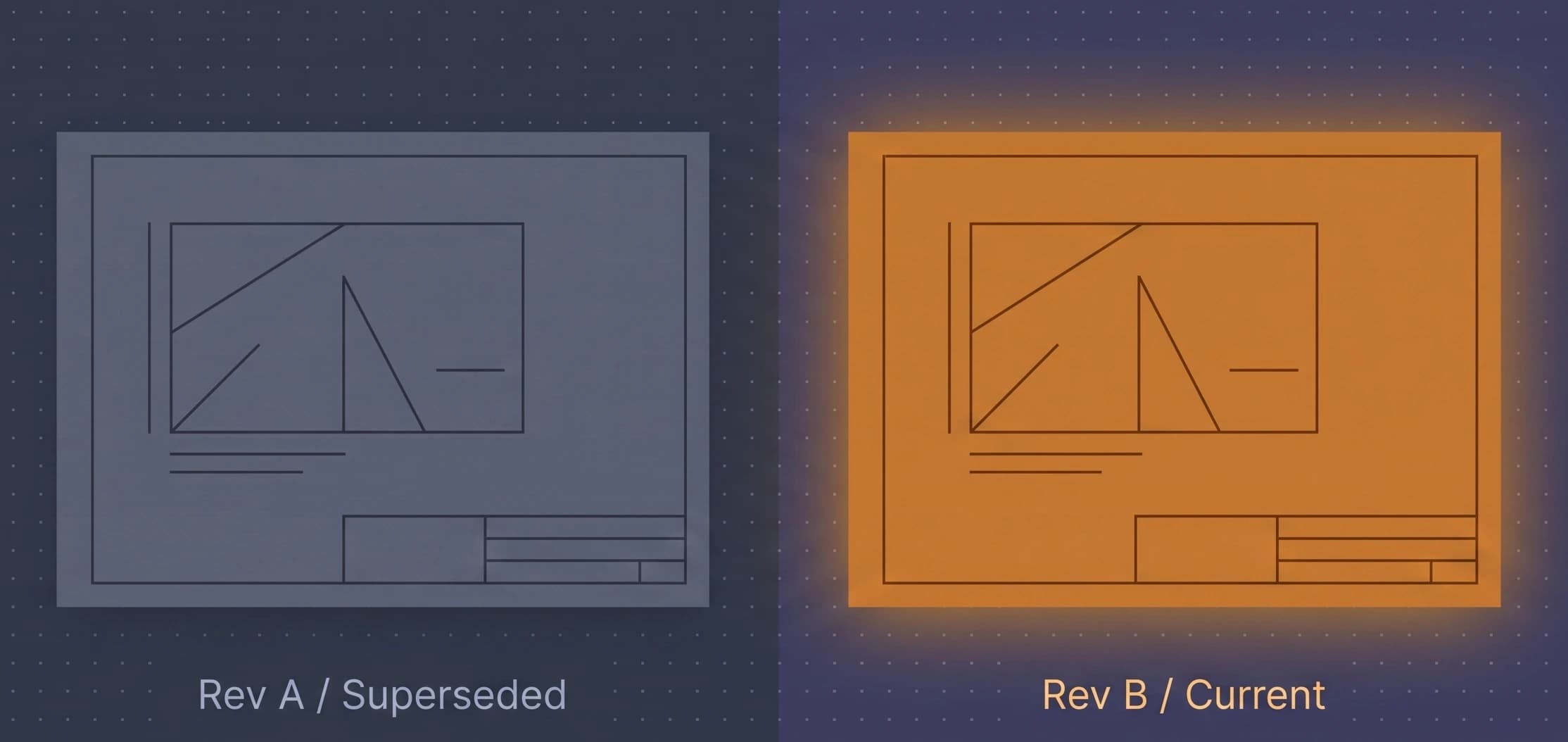
In fluxems the two words have exact meanings. A Version is a whole new upload of a document: a new file lands in the register and takes its place in the history. A Revision is the label that upload carries, the Rev A, Rev B, or P01 that appears in the title block and in the register. Every version has a revision label, and at any moment exactly one revision of a document is Current. Everything else is superseded, still there, still readable, but clearly not the one to build from.
- Version: the upload itself, the actual file and the act of adding it.
- Revision: the controlled label the version carries, agreed by the naming convention.
- Current: the single revision the project should be working from right now.
- Superseded: every earlier revision, kept readable but never mistaken for current.
Why sloppy wording turns into rework
When a foreman asks for "the latest version" over the phone, which one is that? The last file someone emailed? The one saved to a memory stick on Friday? The Rev C that structural issued but architecture has not caught up with yet? Loose language lets three people hold three different answers and feel equally confident. That is how a contractor in Gauteng sets out from Rev B while the design team is already coordinating against Rev C. The steel gets ordered, the openings do not line up, and the dispute starts.
A register with one enforced Current revision kills the ambiguity. The question stops being "which file did you get?" and becomes "what does the register say is current?" One answer, same for everyone, checked in seconds. Our guide to versions and revisions walks through how the mechanics work, and setting a revision as current shows the control itself.
Say the label, not the adjective
Train the team to ask for documents by reference and revision, "STR-201 Rev C", never "the latest one". It feels pedantic for a week. Then it becomes the habit that saves you a demolition saw.
Superseded does not mean gone
Here is the part teams underrate. When Rev C supersedes Rev B, Rev B does not vanish. It stays in the history, readable, with its dates and its trail intact. That matters most when something goes wrong. If a subcontractor priced off Rev A and built off Rev A, the question is whether Rev B had reached them before they started. A register that keeps every superseded revision, with a record of who received what and when, answers that in minutes. Without it, the argument runs on memory and whoever kept the better email folder.
Superseded revisions are your evidence. They show the design as it stood on any given day, which is exactly what a delay claim or a variation dispute turns on. Deleting old files to "keep things tidy" is throwing away the receipts.
Every supersession in fluxems is logged automatically: who uploaded the new version, when, and what it replaced. You can follow the whole trail in the change log.
Make the words match the system
None of this needs a training course. Agree the two definitions, put them in the kickoff pack, and let the register enforce them. New upload equals new version. Label equals revision. One current, everything else superseded and kept. Teams that hold that line spend their energy building instead of arguing about which drawing counts.
If your project still runs on "final_v2_FINAL.pdf", start with the document register, or talk to us and we will walk your team through it with your own drawings.