The handover package that wins arguments
Handover should be an export, not a project of its own. What a clean package contains, why month-end scrambles happen, and how to stay handover-ready from day one.
The fluxems team · Document control
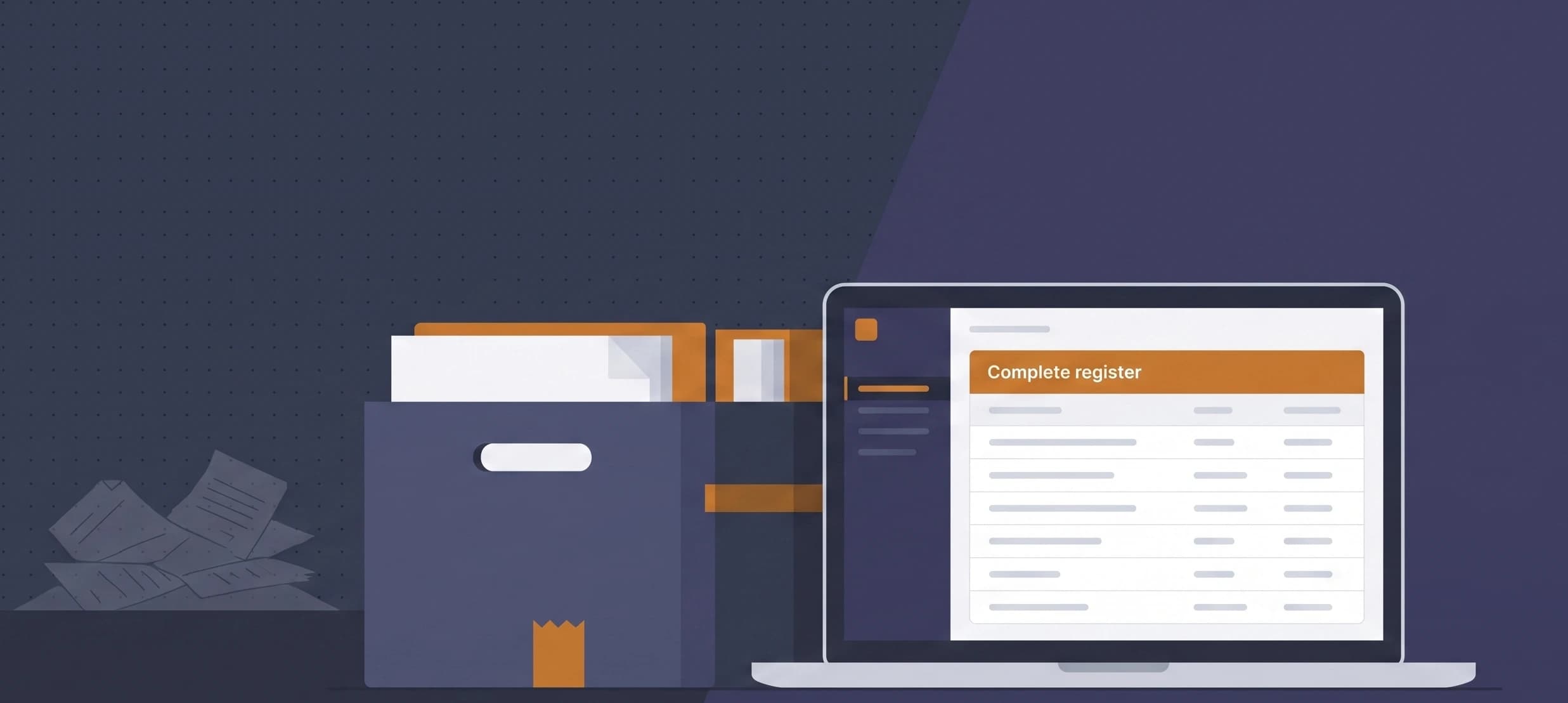
Practical completion is meant to be a good week. On too many projects it is the week the document controller stops sleeping: hunting attachments in old inboxes, begging subcontractors for final versions, rebuilding an issue history from memory. The building is finished but the story of the building is scattered across forty mailboxes. It does not have to be like that.
What a clean handover package contains
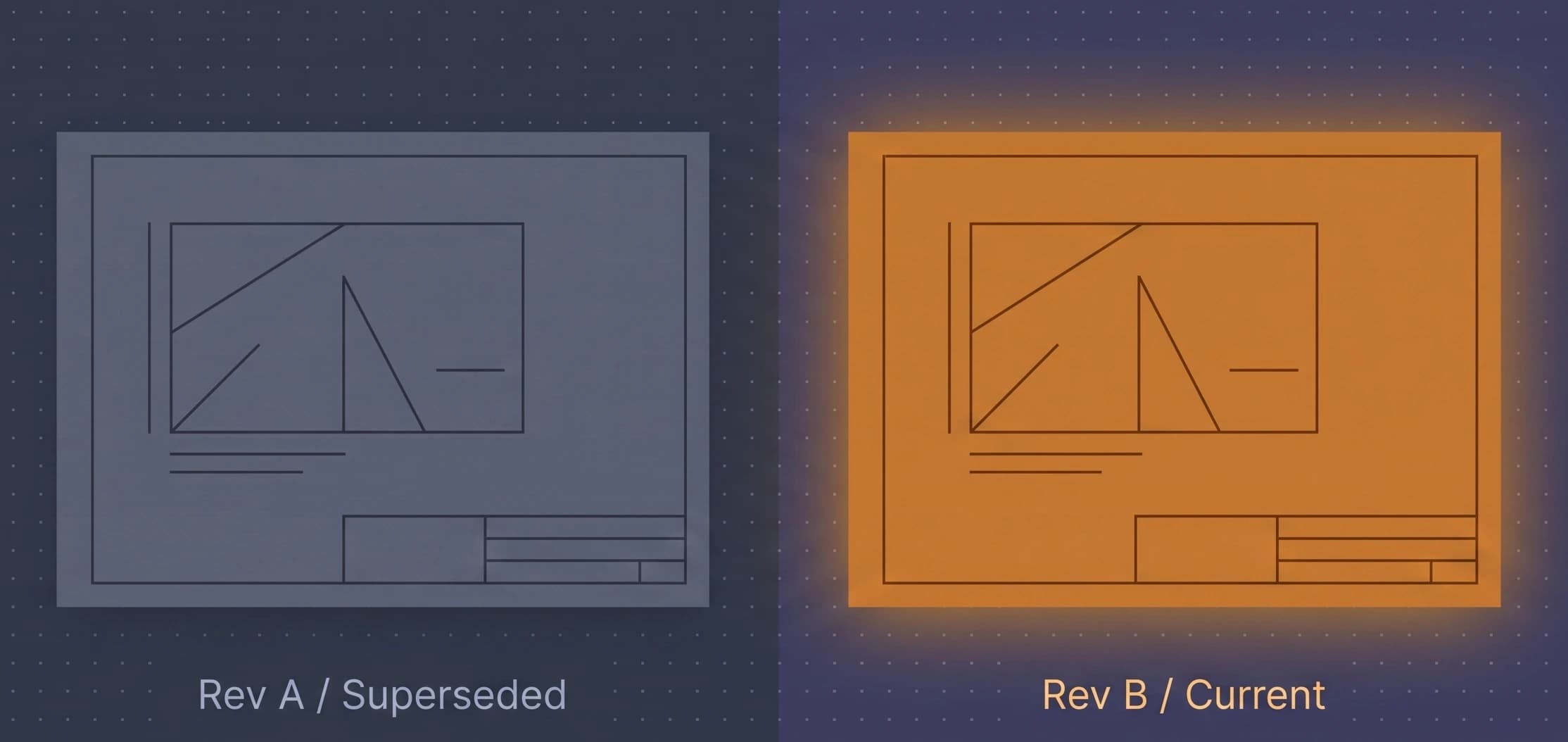
Strip it to essentials and a handover package is two things. First, the published set: the current revision of every document the client needs to own and operate the building, as-builts, operation and maintenance manuals, warranties, certificates, test records. Second, the trail behind that set: the full revision history, the transmittals that issued each document, the approvals that signed them off, and the acknowledgements that prove who received what and when.
- The current revision of every deliverable, clearly marked as the published set.
- The complete revision history behind each document, superseded revisions included.
- Every transmittal, with recipients, reasons for issue, and acknowledgement records.
- The approval record for each document that needed one.
- The audit trail tying it all together with names and timestamps.
The set answers "what did we hand over?" The trail answers "how do we know it is right?" A package with only the first half looks fine until someone questions it. The second half is what wins the argument, whether that argument is a defects claim two years out or a retention release dragging past month end.
Why the month-end scramble happens
The scramble is never caused at handover. It is caused eighteen months earlier, one shortcut at a time. A drawing issued by WhatsApp because it was urgent. A final manual sitting in one person's inbox. An approval given verbally on a walk-around and never recorded. Each shortcut saves five minutes and costs an hour at close-out, because now someone has to find it, verify it, and file it, long after everyone involved has moved to the next job.
The maths of the scramble
A project that issues 40 documents a month for 18 months has roughly 700 issues to reconstruct if they lived in email. At even ten minutes each, that is nearly three weeks of one person's time, spent at the exact moment the client is asking where their package is.
Handover-ready from day one
The alternative is not more effort at the end. It is a habit at the start: run every document through the register, every issue through a transmittal, every sign-off through a recorded review and approval. Do that and the package assembles itself as a by-product of normal work. Nothing needs reconstructing because nothing ever left the system.
- Register every deliverable with a proper reference before work starts on it.
- Issue only through transmittals, so every handover document already has its receipt.
- Record approvals against the exact revision they concern.
- Keep statuses honest, so the published set is visible at any point in the project, not just at the end.
- Review the register monthly: anything the client will need at handover that is not in it yet goes in now.
The one-click export mindset
Here is the test worth applying long before completion: if the client asked for the handover package today, could you produce it from the system in one sitting? Not a perfect final package, but the current set and its trail, exported, complete. If the answer is yes, you are handover-ready and the real thing will be an export plus a review. If the answer is no, you have found the gap while it is still cheap to close.
Teams working this way describe handover as an anticlimax, which is exactly what it should be. If yours still ends in a scramble, the document register is the place to start, or get in touch and we will show you what handover-ready looks like on a live project.