Stop running your project from an inbox
Email built the modern office and it quietly breaks construction projects. Missed revisions, departed staff, CC chains: here is why each happens and what fixes it.
The fluxems team · Product

Email is a wonderful tool for talking to people and a terrible system of record for a construction project. Everyone knows this, and almost everyone runs projects on it anyway, because it is already open and everyone has an address. The cost only shows up later, and by then it has a Rand value attached. Here are the failure modes, one by one, and what actually fixes each.
Failure one: the missed revision
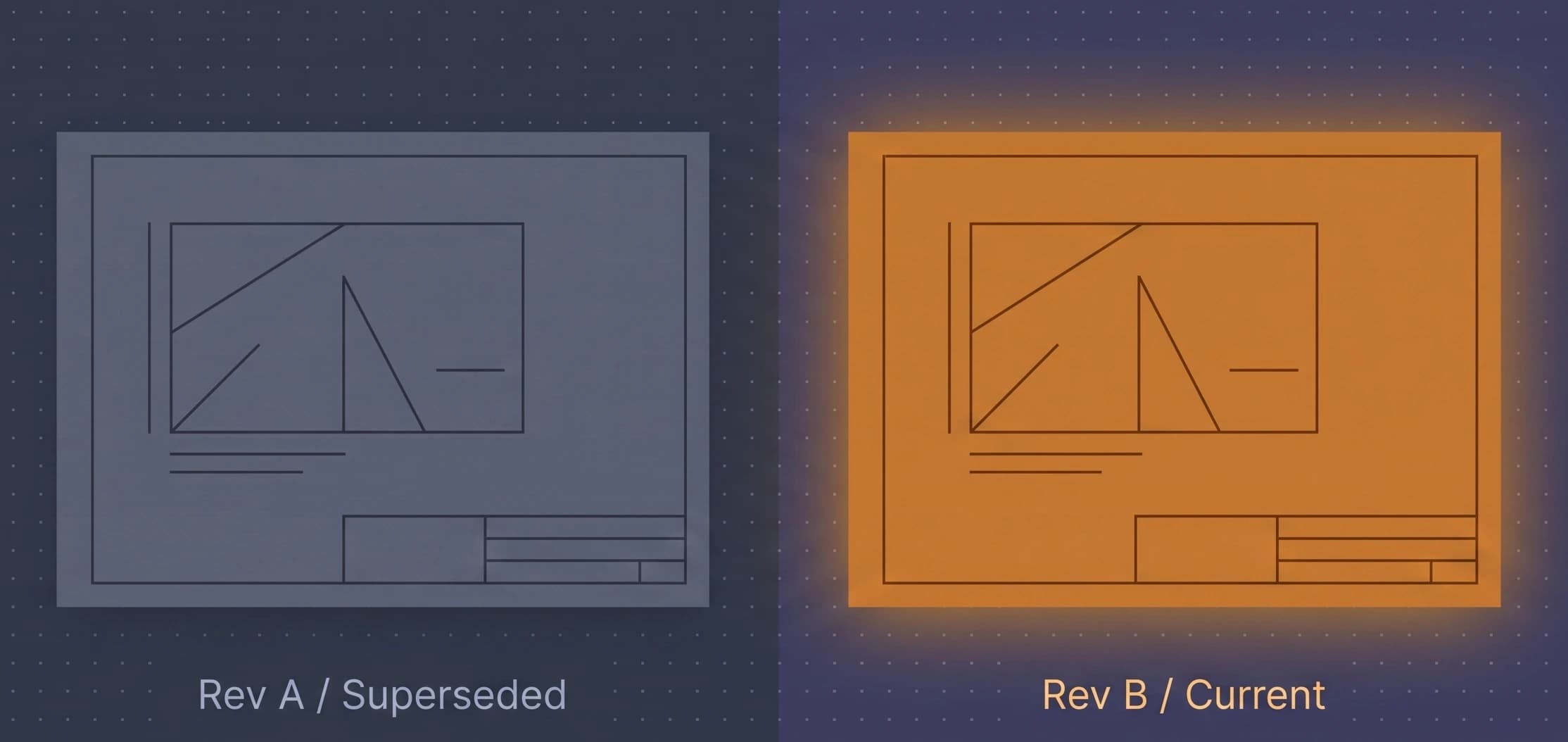
A revised drawing goes out to a distribution list. One estimator is on leave, one address bounces, one message lands in a quarantine folder. Three weeks later part of the team is pricing or building from Rev A while everyone else has moved to Rev B. Email has no concept of a current revision, so it cannot tell anyone they are behind. Every mailbox is its own private version of the truth.
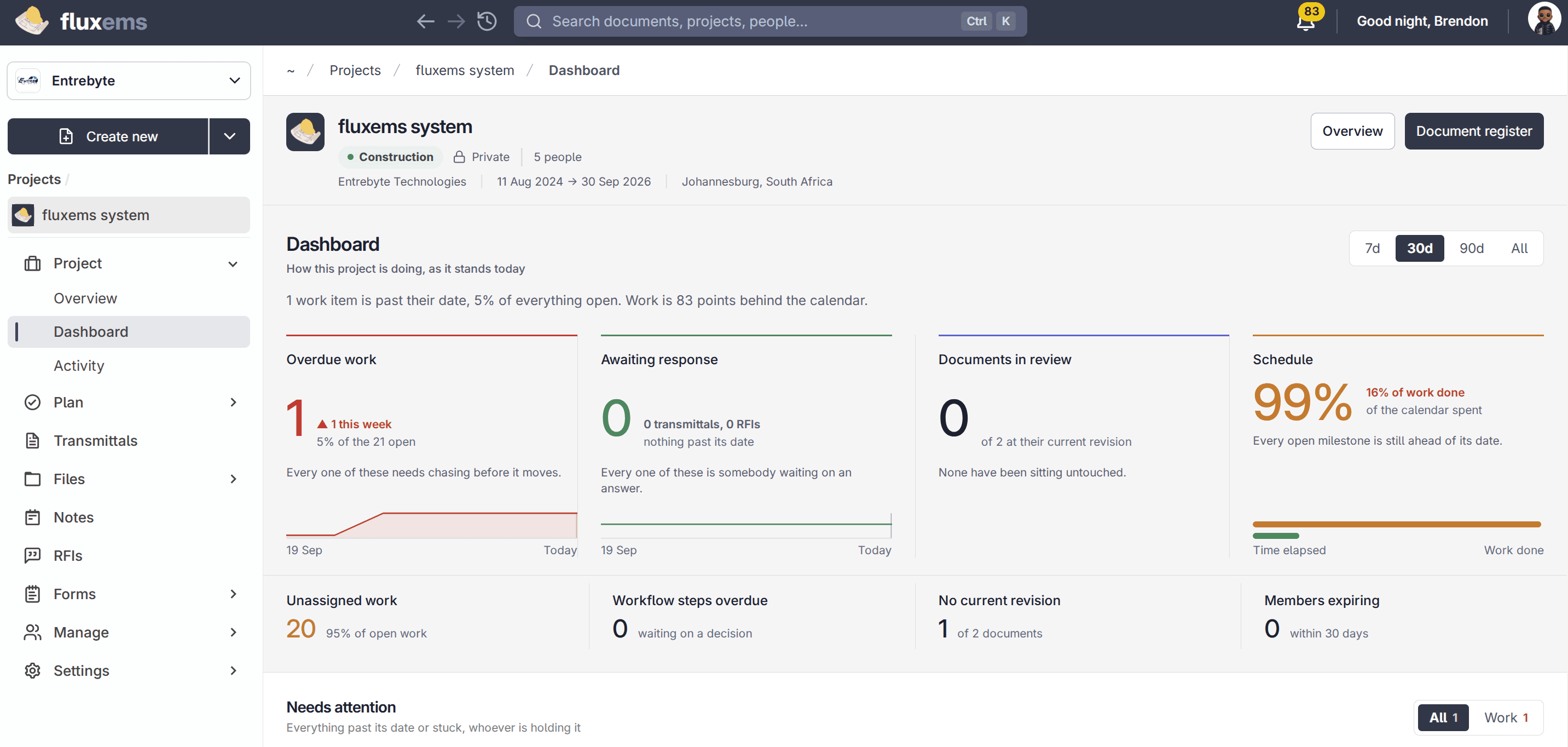
The fix is a document register with one enforced Current revision per document. Nobody has to have received anything: they look at the register and it tells them what is current, the same answer for every person, every time. Issues still go out, but as transmittals with acknowledgement tracking, so a missed one is visible and chaseable instead of silent.
Failure two: the person who left
Every project has one: the coordinator who "had everything in her email". Then she resigns, IT closes the account after the notice period, and eighteen months of approvals, instructions, and issue records leave the company with her. POPIA makes it worse: you cannot simply keep trawling a former employee's personal mailbox as a project archive, nor should you want to.
The fix is correspondence that belongs to the project, not to a person. With project mail, messages are filed against the project itself. When someone leaves, their successor opens the same threads with the full history intact. Nothing walks out the door, because it was never in a personal mailbox to begin with.
Failure three: the CC chain
A question goes to five people. Two reply to all, one replies privately, one forwards it into a new thread with a different subject line, and one says nothing. Now the answer exists in four places, none authoritative, and the person who asked still does not know if the matter is closed. CC is where accountability goes to dissolve: when everyone is copied, nobody owns the reply.
- Threads fork, so there is no single place the answer lives.
- Nobody is named as responsible, so everyone assumes someone else has it.
- There is no deadline, so "still waiting on this" is discovered instead of tracked.
- The eventual answer is buried in prose, unlinked to the drawing it concerns.
The fix for the questions that matter is a formal RFI with ball-in-court. One question, one named owner, one due date, one linked document. At every moment the project can see exactly whose court the ball is in, and the answer, when it comes, is recorded against the RFI forever. For everything lighter, project mail keeps the thread whole instead of letting it fork.
Sort your correspondence into two piles
Pile one: needs an answer someone is accountable for. That is an RFI, so raise one. Pile two: everything else. That is project mail. If a message would hurt to lose in a dispute, it does not belong in a personal inbox.
Each failure has the same root
Missed revisions, the departed employee, the dissolved CC chain: all three are the same defect wearing different clothes. Email stores project information in private copies with no shared state. A register, project mail, and ball-in-court RFIs replace private copies with one shared record, and every failure mode above simply stops being possible.
You do not have to move everything at once. Put the drawings in the register first, route the next issue through a transmittal, raise the next hard question as an RFI. See how the pieces fit on the platform overview, or talk to us about moving a live project across without losing a day.