
01
Projects that hold everything
Documents, tasks, correspondence, dates and people, all filed under the work they belong to.
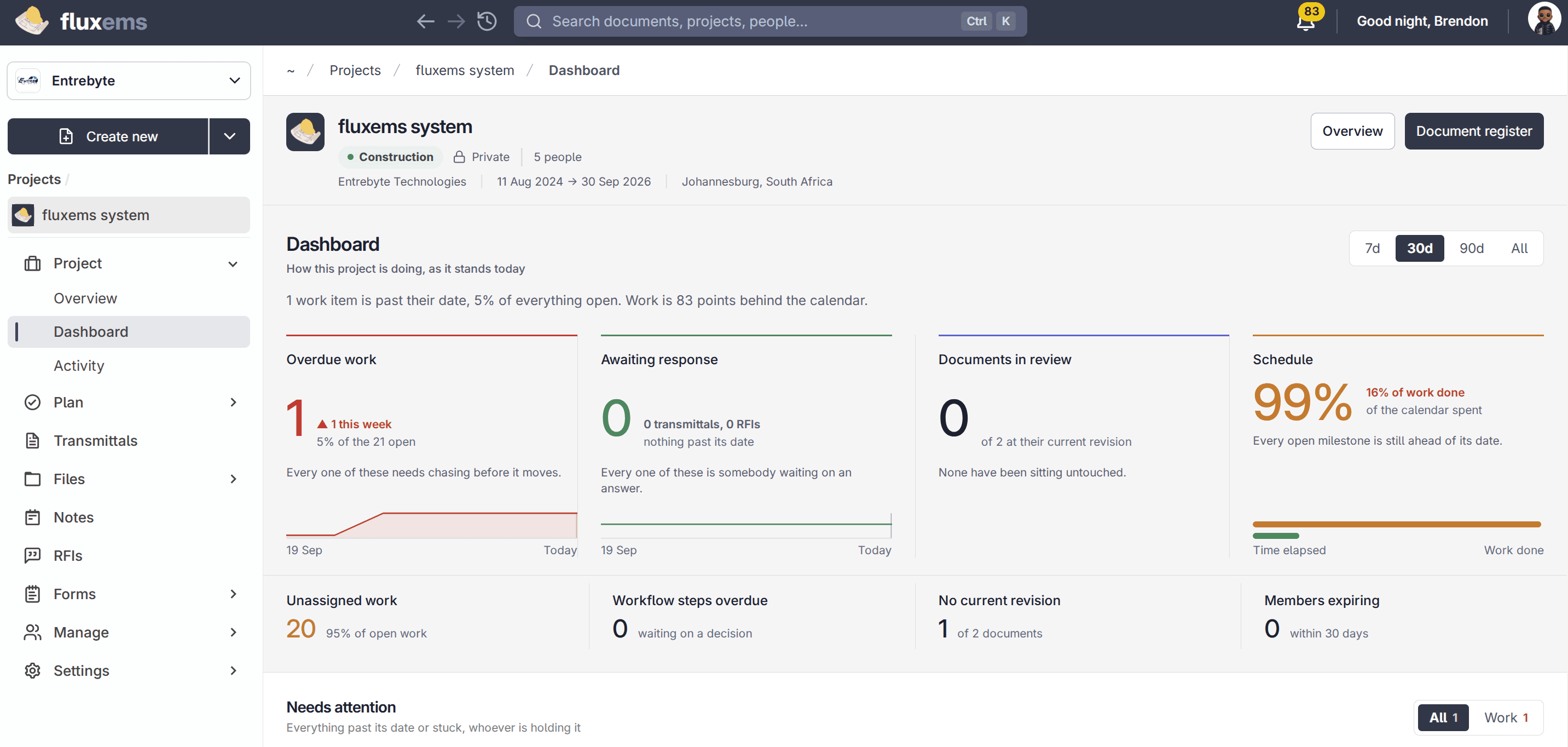
Projects, milestones, statuses and the people on them, with the documents filed against the work rather than beside it.
14 days · 5 seats · every module · no credit card
Status comes from a weekly meeting and a spreadsheet that was accurate on Monday. The documents sit somewhere else entirely, so nobody can go from a status line to the thing it describes.
Documents, tasks, correspondence, dates and people, all filed under the work they belong to.
Key dates on one view, with what is late and who owns it made obvious.
Define the stages your work actually moves through, and see everything sitting in each one.
Add your team and invite people from other companies to a single project, with an expiry date if you need one.
What changed, what is open and what is due, without asking anyone for an update.
Start a new project from a structure you have already used, so day one is not a blank folder.
Pick a structure, add the team, and set the dates that matter.
Documents, tasks and correspondence all file themselves against the project as people work.
Export the current set and the full history as one package on the day you finish.
fluxems marks one revision as current, shows it to everyone, and keeps every earlier one on file.
ExploreTasks, approvals, renewals and meetings on one calendar, each assigned to a person and attached to the work it came from.
ExploreInspections, incidents, safety observations, diaries and sign-offs captured on a phone or a laptop, landing straight on the record they belong to.
ExploreFourteen days free, five seats, every module. Bring real documents, not a demo dataset.
From the first client call to the final invoice, every part of the work sits in one place. Pick how you want to start.
Start on real work in minutes with a 14-day free trial. No credit card required to get started.
14 days · 5 seats · every module · no credit card
Twenty minutes with our team, built around how you already work. Bring a real project and the questions your team will ask.




 Accepted