ISO 19650, explained for the people who actually move drawings
The standard behind modern document control, in plain language: what it asks of your naming, revisions, and audit trail, and how to run a project that stands up to scrutiny.
The fluxems team · Document control
Ask three people on a project what ISO 19650 means and you will get three answers: a naming convention, a BIM thing, or a stack of paperwork the client asked about once. It is actually simpler and more useful than any of those. ISO 19650 is a way of organising information on a construction project so that everyone builds from the right version, every decision is traceable, and handover is a package instead of a scramble.
What the standard actually asks for
Strip away the jargon and ISO 19650 keeps coming back to a few habits. Information lives in a common data environment, not in inboxes. Every document has one identity and a controlled revision history. Status codes say what a document may be used for. And there is always a record of who shared what, with whom, and when.
- One shared home for project information, with access control.
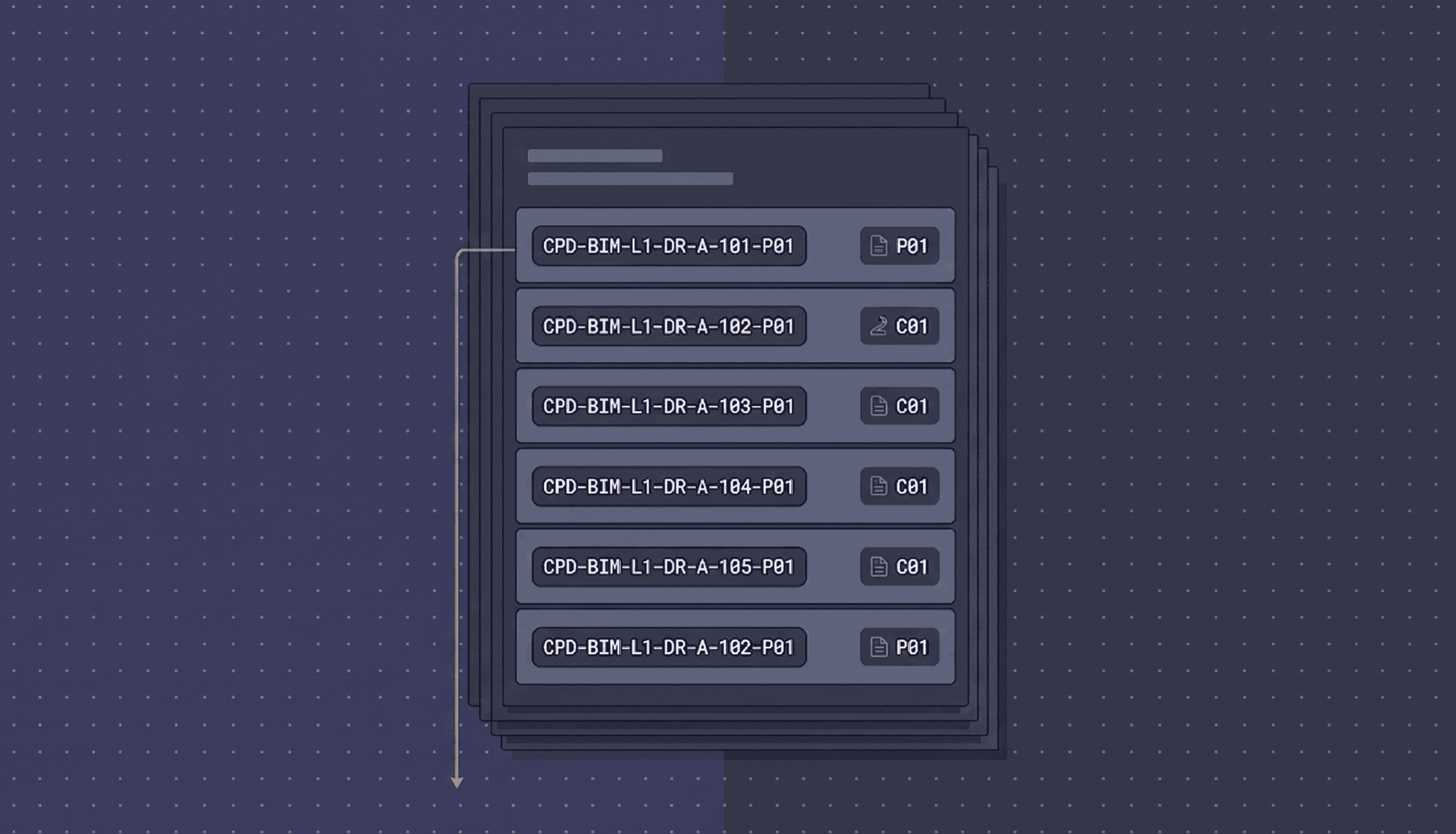
- A consistent naming and numbering convention across every party.
- Controlled revisions: a new version supersedes the old, and the old stays readable.
- Suitability codes that say whether a document is work in progress, shared, or published.
- A trail of transmittals and approvals you can produce years later.
Sound familiar?
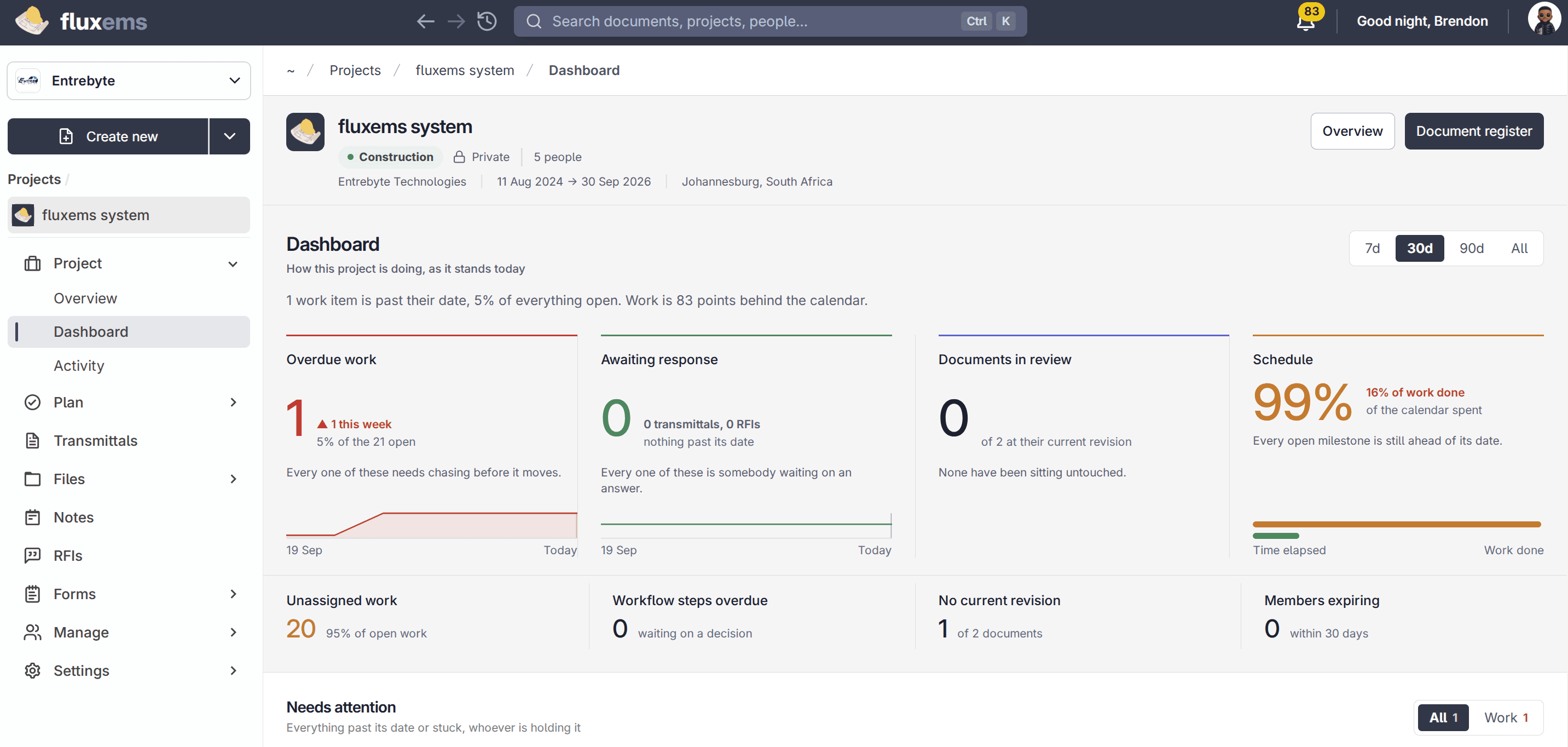
If you have read our guide to how fluxems is organised, this list will feel familiar. The register, versions and revisions, suitability codes, transmittals, and the audit trail are all built around the same principles the standard formalises.
Why clients keep asking about it
Public sector frameworks and larger developers increasingly write ISO 19650 into their appointment terms. When they audit a project, they are not looking for a certificate on the wall. They are looking for evidence: can you show the current set, the history behind it, and the receipts for every issue? Teams that run a disciplined register pass those audits without a special effort, because the evidence is a by-product of how they work.
What this looks like day to day
- Documents are registered once, with a reference built from discipline and sequence, and never renamed ad hoc.
- Revisions supersede: nobody deletes, nobody overwrites, and the register always shows what is current.
- Issues go out as transmittals with named recipients and acknowledgement tracking, not as email attachments.
- Reviews and approvals happen against the document, so the decision is linked to the exact revision it concerned.
- At handover, you export the published set and the full trail as one package.
Where fluxems fits
fluxems is built around these principles: enforced document references, controlled revisions with a permanent history, suitability codes with WIP and published stages, transmittals with receipts, and an immutable audit trail. We are not certified against the standard, and we will not pretend to be. What we give you is software whose defaults match the way ISO 19650 expects a project to run, so following the standard is the path of least resistance instead of extra admin.
Tip
Start small: agree a naming convention, register your current set, and route every issue through a transmittal. Those three habits carry most of the weight of the standard.
Want to see how a compliant register runs in practice? Book a walkthrough with your own drawings, or start with the document register guide in the Help Center.